
+
Doctor of Philosophy
With Certificate of Graduation for Doctorate Study
Personal Information
Gender:Male
E-Mail:
Other Contact Information
Email:
Doctor of Philosophy
With Certificate of Graduation for Doctorate Study
Gender:Male
E-Mail:76ea01a5572d40248c27397167256a9738caf52a2452fbcba8eb11b5a6c7f400842635882b0a35f4e05fbd848f24f729b301cae64c1a50ad7091fcf2604a75690a655c13966acb1632cee1a66bd7e034e8e0a74dd6a580423758311a16bf883b472838ff09c3f4ff99b14b4d6336af473586bba3a9fab59d7670fd95e225be68
Email:76ea01a5572d40248c27397167256a9738caf52a2452fbcba8eb11b5a6c7f400842635882b0a35f4e05fbd848f24f729b301cae64c1a50ad7091fcf2604a75690a655c13966acb1632cee1a66bd7e034e8e0a74dd6a580423758311a16bf883b472838ff09c3f4ff99b14b4d6336af473586bba3a9fab59d7670fd95e225be68
Next-Generation Radar Waveform Design: Intelligent, Game-Theoretic, and Learning-Driven
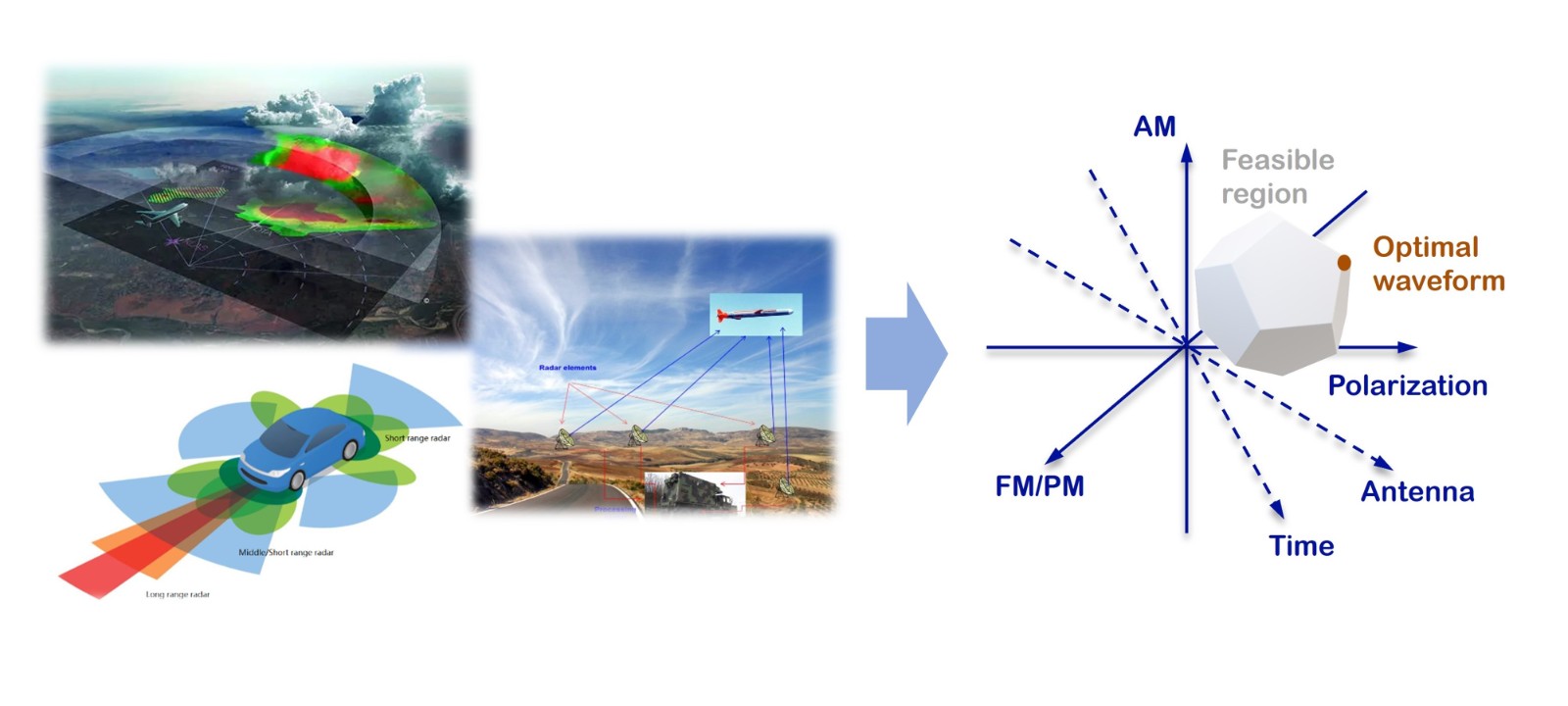
Radar waveform design is fundamental to enhancing radar sensing performance. This research explores advanced methods using intelligent optimization, game theory, and meta-learning to solve the core trade-offs among resolution, ambiguity, and robustness in complex electromagnetic environments. We aim to significantly improve target detection, tracking, and identification in next-generation active sensing systems.
The core challenge lies in efficiently finding optimal or sub-optimal waveforms within a constrained high-dimensional parameter space. Our work unifies analytical, model-based, and data-driven approaches within this framework.
By developing new design paradigms that integrate intelligent decision-making and adaptive learning, this research provides key theoretical and technological foundations for future cognitive and collaborative radar systems.
Integrated Sensing and Communications: Intelligent Waveforms, Collaborative Sensing, and Cross-Layer Optimization
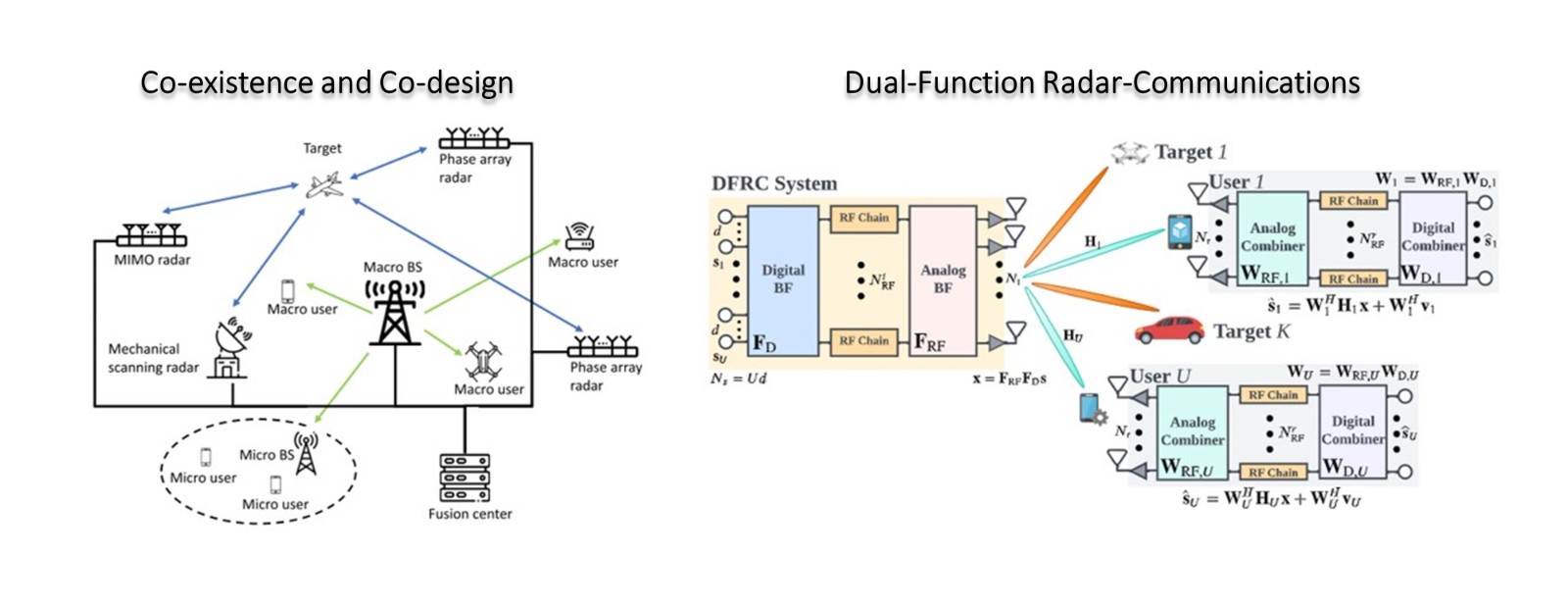
Integrated Sensing and Communications (ISAC) is a key paradigm for next-generation wireless networks, unifying communication and sensing functions for synergistic performance gains. Our research focuses on three interconnected layers: intelligent waveform design, multi-node collaborative sensing, and cross-layer resource optimization, addressing fundamental challenges in spectrum sharing, performance trade-offs, and system efficiency.
We develop unified waveforms that ensure compatibility between high-rate communication and high-accuracy sensing. Through architectures leveraging intelligent reflecting surfaces and distributed nodes, we overcome the limitations of single-station systems. Finally, our cross-layer optimization frameworks dynamically allocate resources based on sensing tasks and network conditions for global system efficiency.
This integrated "signal-architecture-system" approach provides fundamental support for realizing the high-reliability, low-latency, and high-precision sensing-communication capabilities required in future 6G networks.
Reconfigurable Electromagnetic Environments: Intelligent Surfaces and Dynamic Arrays
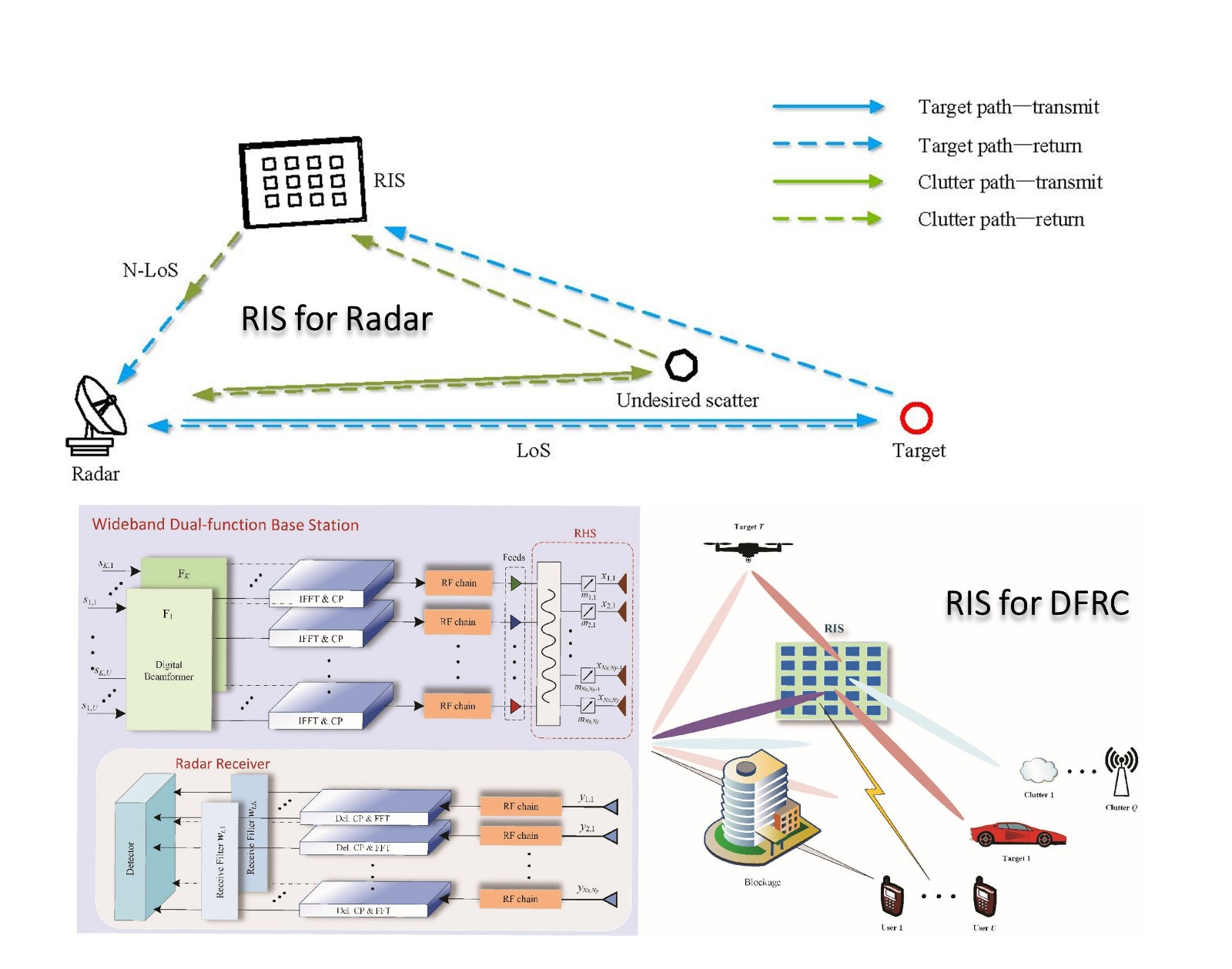
Reconfigurable electromagnetic environments enable revolutionary control over wireless propagation and radiation characteristics. This research investigates intelligent reflecting surfaces (RIS) and dynamic antenna arrays (e.g., fluid antennas) to overcome fundamental limitations in wireless sensing, such as coverage gaps, multipath fading, and restricted viewing angles.
Our work spans both passive and active reconfiguration. Intelligent surfaces dynamically shape wireless channels to enhance signal strength and diversity. Dynamic arrays enable real-time beamforming and pattern adaptation for precise and agile sensing.
By co-designing channel control and antenna systems, this research builds the foundation for robust, adaptive, and intelligent next-generation wireless sensing.
Distributed Sensing and Localization: Synthetic Aperture, Optimal Deployment, and Resource Allocation
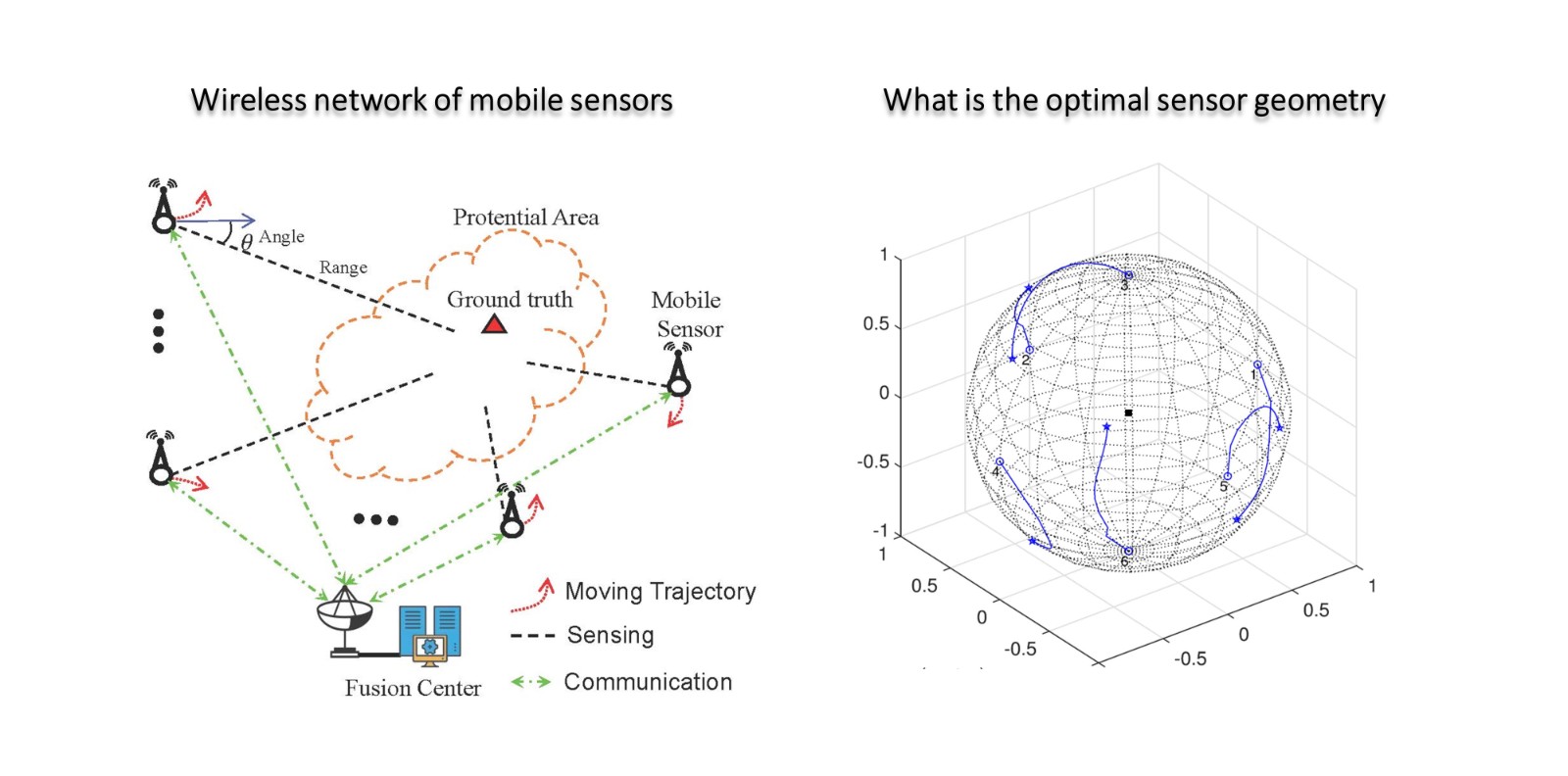
Distributed sensing and localization utilize networked nodes to achieve superior accuracy and robustness beyond single-station capabilities, such as distributed coherent aperture radar (DCAR). Our research focuses on three pillars: virtual aperture synthesis, optimal sensor deployment, and dynamic resource allocation, addressing the trade-offs among accuracy, cost, and efficiency in complex environments.
We create virtual apertures from distributed nodes for high-resolution, long-range imaging. Using tools like the Cramér–Rao Bound, we optimize sensor placement and configuration to maximize accuracy under practical constraints. We also develop resource allocation strategies that dynamically manage spectrum, power, and computation across heterogeneous networks for optimal system performance.
This integrated "deployment-processing-scheduling" framework provides core theories and system solutions for reliable sensing and localization in future IoT and emerging aerial networks.
Address: Shahe Campus:No.4, Section 2, North Jianshe Road, 610054 | Qingshuihe Campus:No.2006, Xiyuan Ave, West Hi-Tech Zone, 611731 | Chengdu, Sichuan, P.R.China © 2010 University of Electronic Science and Technology of China. All Rights Reserved
Click: | The Last Update Time:.. | University of Electronic Science and Technology of China